Where the dirty water goes
Twenty gallons comes out of a bin. Storm drains empty into creeks, not treatment plants. Here is how we handle it.
5 min read
Here is a question almost nobody asks a bin cleaning company, and probably should.
When someone power washes the inside of a trash bin on your driveway, roughly twenty gallons of water comes out of it. That water is carrying food residue, grease, bacteria and whatever cleaning product was used.
Where does it go?
If the answer is "down the driveway," it goes into the gutter, into the storm drain, and out into the creek. Untreated. Storm drains are not connected to a treatment plant. They exist to move rainwater off the road, and they empty into the nearest waterway.
That is illegal in Texas, and it is illegal everywhere else too.
The part that surprises people
"Biodegradable" does not change the answer.
We use products chosen partly because they are water based and biodegradable, and it still does not matter. Biodegradable means it breaks down eventually under the right conditions. It does not mean it belongs in a creek this afternoon along with the grease and bacteria it just lifted out of your bin.
The rule is about the whole waste stream, not the label on the jug.
How we handle it
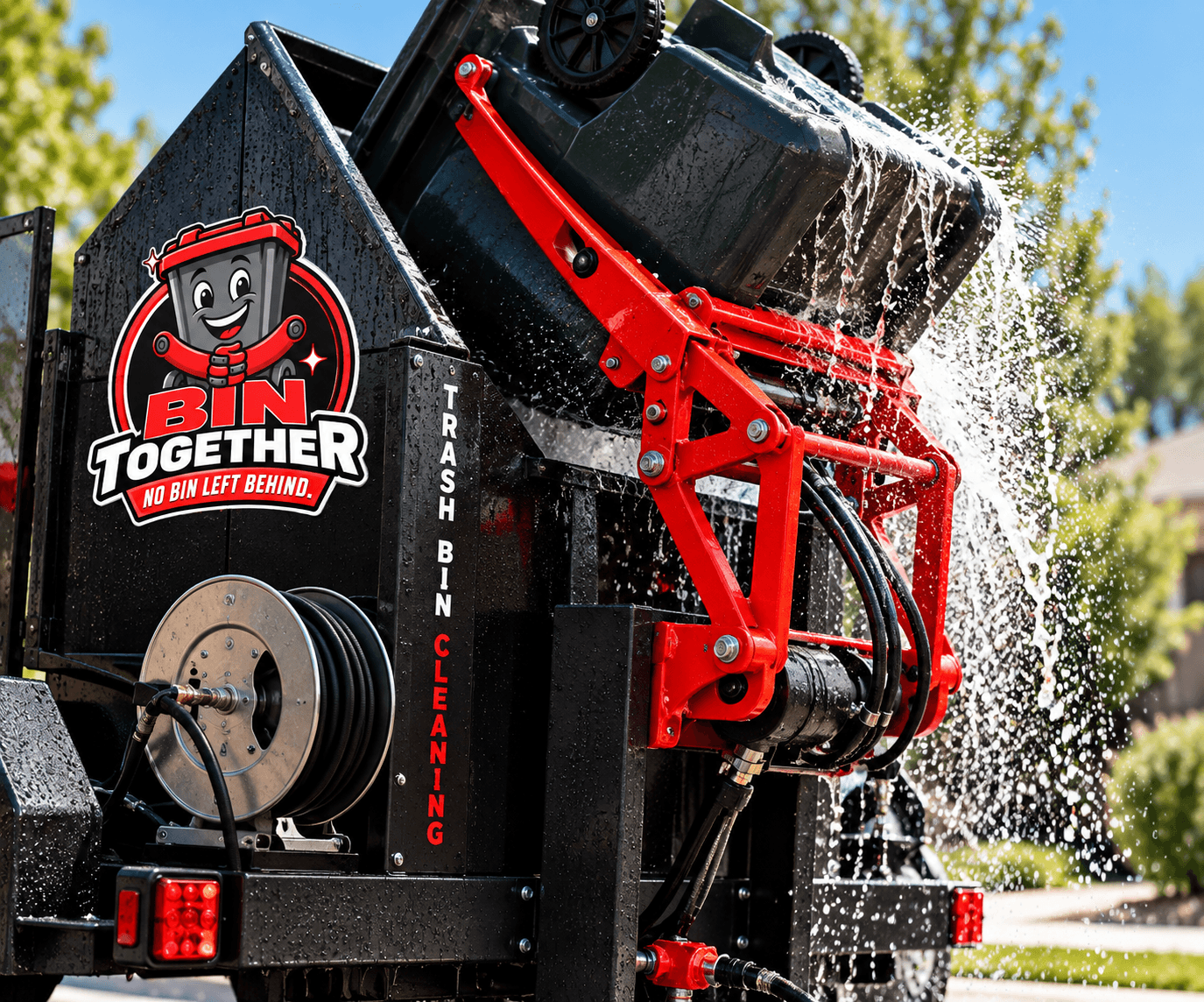
Everything is recovered. Our rig is built to capture the wash water rather than let it run. Nothing goes onto your driveway and nothing reaches the gutter.
Solids get screened out. Trash, grit and food debris are separated before the water is stored.
It leaves with us, in a gray water tank on the trailer.
It gets discharged into the sanitary sewer, through an approved connection with written permission. Sanitary sewer goes to a treatment plant. Storm drain does not. Those two words look similar and mean completely different things.
Every load gets logged. Date, location, gallons, and the receipt or manifest number. We keep the safety data sheets for every product with the rig.
None of this is visible to you, and it accounts for a real share of what it costs to run this business properly.
Where it actually goes
For our area the legitimate options are a permitted sanitary sewer connection at a commercial property, or a municipal receiving facility. Denton's Pecan Creek Water Reclamation Plant takes hauled liquid waste from permitted haulers. Fort Worth requires a permit for this kind of work and publishes rules about where it may be discharged.
What is never acceptable, no matter how convenient:
The street, curb, gutter or storm drain
A creek, pond, drainage ditch or vacant lot
An open sewer manhole
A residential toilet or cleanout without permission from the owner and the utility
An RV dump station, unless the operator has approved this waste stream in writing
About the products we use
We use a degreaser to break down the film inside the bin, and a deodorizer after the wash. Both are chosen for cleaning performance, material safety on the plastic your cart is made of, and compatibility with a recovery system.
One thing we are careful about, and you should be too.
There is a difference between cleaned, deodorized, and sanitized. The first two are what most bin cleaning actually is. The third is a regulated claim: to say something is sanitized, the product has to be EPA registered for it, and it has to be used at the exact dilution on the label and left wet on the surface for the full contact time. A quick spray of something citrus scented is not sanitizing, no matter what the website says.
Plenty of companies use that word loosely. We would rather tell you what we actually do.
When we finalize our chemical lineup we will publish exactly what we use, and if a product supports a sanitizing claim at the dilution and dwell time we can actually deliver on a route, we will say so and show you the label. Until then, we say degreased and deodorized, because that is what is true.
Why any of this matters to you
Three reasons, in order of how much they should matter.
Your neighborhood drains somewhere. The storm drain at the end of your street goes to a creek your kids probably play near.
It is a signal about everything else. A company willing to dump twenty gallons of grease water in your gutter because nobody is watching is telling you how it handles the parts of the job you also cannot see.
It protects you. Stormwater violations can land on the property owner, not only the contractor.
If you ever want to see the tank, ask. We will show you.
Keep reading
More from behind the bin: how we clean, where the water goes, and what we are learning as we build this.


